
This lowers the number of outstanding shares as the company purchases a portion of its stock. The remaining shares increase in value because the same earnings are now distributed among fewer shares when a company repurchases its shares from the market. The company determines the maximum number of shares it can issue, when creating a company. The board of directors or shareholder vote may increase the number of authorized shares. Authorized shares, sometimes referred to as authorized capital or approved stock, are the maximum number of shares of stock that a company’s charter or articles of incorporation permit it to issue.
Calculation of “Weighted Average Shares Outstanding”
- Contrary to this, the stock with a much lower number of outstanding stocks could be more vulnerable to price manipulation, requiring much fewer shares to be traded up or down to move the stock price.
- Outstanding shares refer to the total number of shares of a company’s stock that shareholders currently hold.
- Employee stock options, provided by companies as compensation to employees, can also dilute the existing shareholding pattern once exercised.
- Let’s say that a company has authorized 10,000 shares of stock, and it has sold 8,000 of these shares to investors.
- Their voting rights allow them to participate in policy decision-making, elect directors, participate in corporate policies, etc.
Investors gain insight into the full extent of potential dilution and its effects by accounting for fully diluted shares, leading to more transparent and realistic investment analysis. Some potentially convertible securities are anti-dilutive, meaning their inclusion in the EPS calculation would result in higher diluted EPS than the company’s basic EPS. Backtests are an interactive analysis tool from Generated Assets that calculates how your specific selection of securities would have performed historically. Returns displayed by the backtest are hypothetical in nature, do not reflect actual investment results, and are not guarantees net sales of future results. For comparison purposes, the backtest may display performance of a benchmark index such as the S&P 500® over the same time period.
- You can find the number of common stock outstanding by looking up a company’s most recent 10-Q or 10-K filing on its investor-relations webpage or the SEC’s website.
- In contrast to fully diluted shares, which indicate the number of shares that would be issued if a company’s convertible instruments were exercised, basic shares are the stock that all shareholders own.
- Tax-loss harvesting (“TLH”) will automatically occur whenever your DI Account rebalances or experiences a cash inflow or outflow.
- Financial statements are invaluable resources for finding a company’s shares outstanding.
- Start by going to the balance sheet of the company in question and looking in the shareholders’ equity section, which is near the bottom of the report.
Calculating the Weighted Average Shares Outstanding
Stock buybacks and issuances can significantly impact outstanding shares. Stock repurchases lower the number of outstanding shares, increasing the value of each remaining share. To identify preferred stock, look for the line item on the company’s balance sheet. Authorized shares are the maximum number of shares a company can issue, as stated in its charter or articles of incorporation. Learn how to calculate share dilution in startups with simple steps and clear examples to understand ownership changes during funding rounds. The numerator in the diluted EPS calculation is the net income of the business, minus any paid preferred dividends.
- Outstanding shares are the total number of shares issued by the company except the ones held in the company treasury.
- The company’s financial indicators, such as earnings per share and ownership percentage, can be impacted by the number of shares that are outstanding overall and any changes to that number.
- In the world of finance and investments, outstanding shares are a critical indicator that investors use to assess the value of a company’s stock and the ownership stake that each shareholder possesses.
- Management shares can provide certain advantages for investors, particularly regarding interest alignment, expertise, experience, and stability.
- The company has 4.32 billion authorized common shares, of which 3,119,843,000 have been issued as of December 31, 2014.
- As the corporation issues additional shares or undertakes a share repurchase program, the number of outstanding shares may fluctuate over time.
How to find angel investors find investments and funding
Most financial data providers (like Yahoo Finance, Google Finance, and Bloomberg) automatically adjust historical data for stock splits and reverse splits, so you don’t usually have to do this yourself. The overall pizza (the company’s value) remains the same, but each slice (each share) is smaller. For example, in a 2-for-1 stock split, an investor who previously owned one share now owns two.

The formula for calculating the shares outstanding consists of subtracting the shares repurchased from the total outstanding shares formula shares issued to date. However, be aware of potential variations in calculating these shares based on company reports. Some companies may have complex capital structures, such as multiple classes of shares with different rights and restrictions. In these cases, it becomes necessary to carefully analyse the company’s financial statements and disclosures to accurately determine their number.
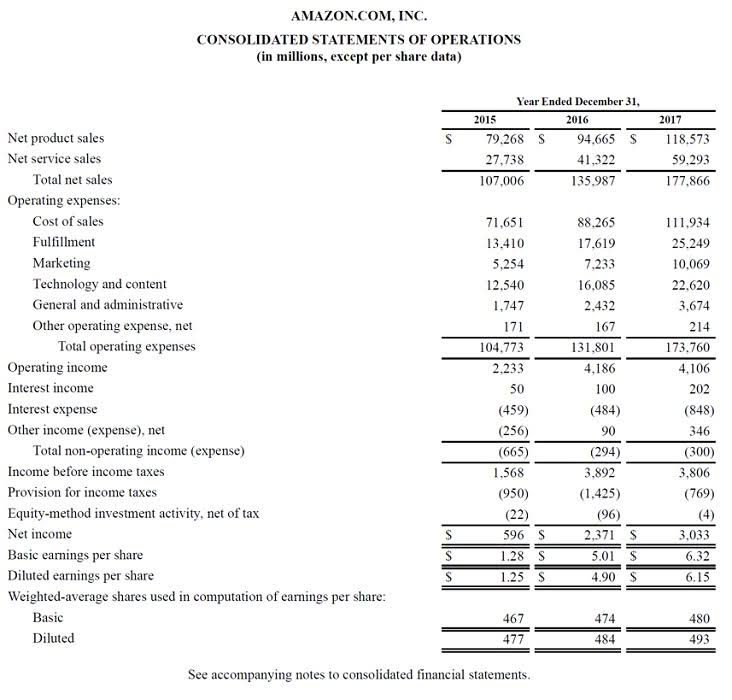

This reduction generally increases earnings per share (EPS) and can signal management’s confidence in the company’s value, potentially boosting share price. Outstanding shares represent the number of a company’s shares that are traded on the secondary market and, therefore, are available to investors. Of these terms, the two that you need in order to determine the number of outstanding shares are issued shares and treasury shares. Generally, both of these figures can be found on a company’s balance sheet.
What does Earnings Per Share mean?
Deferred shares benefit investors, particularly in terms of higher potential returns and lower risk of dilution. Investors should carefully evaluate the potential disadvantages of deferred shares, such as restricted control and uncertainty when making an investment decision. Redeemable shares are ideal for individuals seeking a lower-risk, fixed-income investment. Investors should be aware of the restricted potential for capital https://www.revistalate.co/how-ap-automation-helps-healthcare-companies/ appreciation and the possibility of a price discount when the shares are redeemed.
How to Calculate Workdays in Excel with Simple Formulas
A common method used by investors to assess a company’s profitability is known as EPS. Investors should also be aware of the kind of shares being offered because different classes of shares may have varied dividend distributions and voting rights. Furthermore, information about the past issuance of new shares by the company and any outstanding warrants or options might shed light on the likelihood of future dilution of shareholder value.
Private companies are generally not required to report EPS unless mandated by lenders, investors, or regulators. Without weighting, companies could manipulate EPS by repurchasing shares near the end of the year to artificially boost per-share profit. If the line exists, there should be a statement within the line item description stating the number of shares repurchased, which you should retain. The “% Weight” for each period is 25%, since each time period represents a quarter of the fiscal year. Stay informed with Strike’s guide on in-depth stock market topic exploration.
Premium Investing Services
As a real-world example, here is some information from Johnson & Johnson’s (JNJ +2.57%) 2014 year-end balance sheet. The company has 4.32 billion authorized common shares, of which 3,119,843,000 have been issued as of December 31, 2014. However, it doesn’t account for potentially dilutive securities, like stock options or convertible debt, which may increase the number of shares. In the world of finance and investments, outstanding shares are a critical indicator that investors use to assess the value of a company’s stock and the ownership stake that each shareholder possesses. Two types of outstanding shares that investors should be aware of are basic shares and diluted shares.